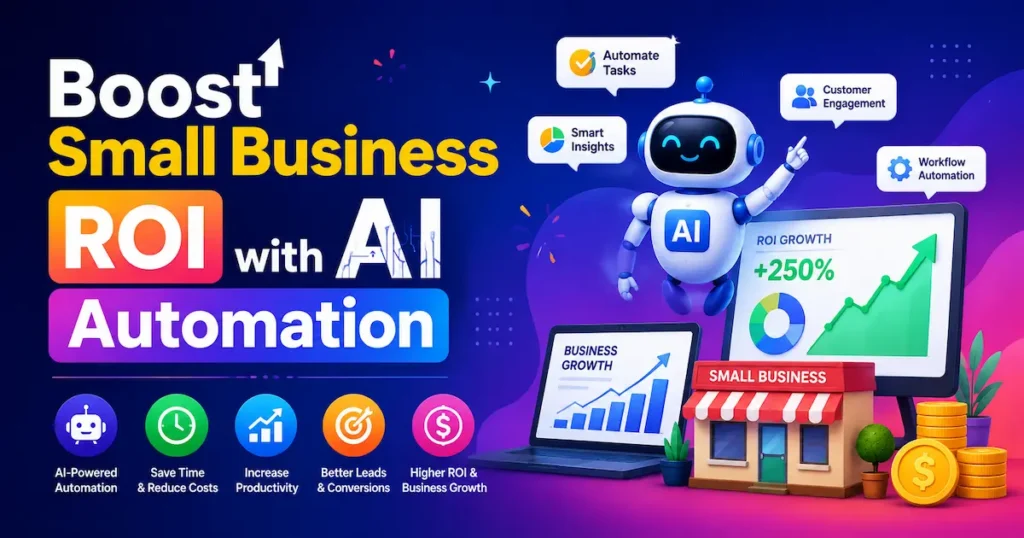
Small businesses face tight budgets and fierce competition. AI automation changes that by handling repetitive tasks, freeing owners for strategic work. In 2026, 68% of small businesses in the US, Canada, UK, and Australia use AI regularly, up from 48% last year, boosting productivity significantly.
Survey shows two-thirds report higher output. Meanwhile, large firms gain more from AI, widening gaps; small operations must act fast. Tools now cost little, with free tiers available.
This Guide by The Futuristics will teach you the benefits of adopting AI automation in businesses and hacks for the small businesses.
Key Benefits of Business Automation with AI
- AI drives measurable gains. It cuts admin time by 30-50% and lifts efficiency by 85% for adopters.
- AI personalizes customer experiences. Chatbots handle queries 24/7, improving satisfaction.
- Costs drop too—predictive maintenance saves 25% yearly. Overall, 92% see results like faster decisions.
Top AI Automation Tools for Small Business
Choose tools that integrate easily. Start with versatile ones for quick wins.
- ChatGPT: Drafts emails, content, and plans. Free version powers daily tasks.
- HubSpot CRM: Scores leads, predicts deals. Free for starters.
- Notion AI: Organizes projects, summarizes notes. Central hub for teams.
- Zapier: Connects apps for no-code automations. Free for basics.
- Grammarly/Reply.io: Polishes communication, automates sales outreach.
- QuickBooks Intuit Assist: Categorizes expenses, generates reports saves 60-70% bookkeeping time.
- Otter.ai: Transcribes meetings instantly.
These fit budgets under $50/month. Test free trials first.
Top Hacks:
Hack 1: Automate Customer Support
Chatbots answer FAQs round-the-clock.
Small US consultancies qualify leads via AI agents, boosting conversions.
In Canada, Loop Earplugs uses Ada for fast help, scaling service without hiring, gaining 357% ROI. Integrate with sites like Shopify.
Steps to implement:
- Pick Tidio or Drift.
- Train on common queries.
- Monitor and refine.
Frees staff for complex issues. Transition to sales next.
Hack 2: Streamline Marketing with AI
Generate content fast. ChatGPT creates posts and emails from prompts.
UK’s Rubix uses AI for targeted campaigns; US firms like OnDeck personalize via data. Shopify Magic writes product descriptions in seconds.
Quick wins:
- Analyze feedback for journeys.
- Automate social scheduling.
- Score engagement.
Saves 8+ hours weekly. Links well to CRM tools.
Hack 3: Boost Operations and Inventory
Predict stock needs. AI dashboards spot trends, like sales drops.
Australian e-commerce cuts fulfillment errors 85%.
Canadian Three Ships personalizes via skin analysis. Notion AI populates databases.
Use Zapier for invoice scanning, retailers process faster, with fewer mistakes.
Hack 4: Sales and Lead Automation
Reply.io personalizes outreach.
Clari forecasts pipelines for small teams.
US OnDeck automates loans, speeding approvals. HubSpot scores leads automatically.
Pipeline hack:
- Research prospects.
- Sequence emails.
- Track engagement.
Competes with big players.
Hack 5: Enhance Team Productivity
Otter.ai summarizes meetings; Notion drafts SOPs.
Consultants save hours on notes.
Asana AI assigns tasks.
Intuit Assist tracks goals, predicts churn.
Real-World Examples from High-Paying Markets
US: Retail Fulfillment
E-commerce firms automate picking/packing, slashes errors, and grows sales.
Canada: Three Ships Beauty
AI skin quiz boosts routines, cuts hiring needs.
UK: Rubix Manufacturing
Predictive maintenance drops downtime 40%.
Australia: QuickBooks Users
68% report productivity jumps via AI.
US: OnDeck Finance
RPA handles loans, cuts delays.
These prove ROI, startups scale like enterprises.
Getting Started with Small Business AI Automation
Identify pain points first. Pilot one tool, measure time saved.
Roadmap:
- Audit tasks (admin, support).
- Choose 1-2 tools according to your needs.
- Train team (5-10 hours).
- Track metrics weekly.
- Scale winners.
Budget $0-100/month. No tech skills needed, and no coding as well.
Overcome hurdles like knowledge gaps (77% barrier). Free resources abound.
Overcoming Common Challenges
- Costs worry many, but free tools exist. Explore these “Top Automation tools to manage your workflow“
- Talent shortages? Off-the-shelf solutions train themselves.
- Data privacy: Use compliant tools like HubSpot. Start small to build confidence.
Future of AI Automation
By 2030, generative AI adds $100B for SMEs. Expect agentic AI handling full workflows.
Small businesses adopting now will lead. Integrate across tools for max impact.
Frequently Asked Questions
AI automation uses tools to handle repetitive tasks like emails or inventory, freeing time for growth. 68% of small firms see productivity boosts.
It summarizes meetings, generates reports, and predicts trends—saving 30% admin time per Intuit data.
ChatGPT, Zapier (basic), Canva AI, and HubSpot free CRM top lists for starters.
Yes, plug-and-play tools like Notion AI or Shopify Magic require no coding. Start with one task.
Up to 357% like Loop Earplugs, or 40% downtime cuts. 92% see results.
US consultancies automate leads; UK manufacturers predict maintenance, both scale efficiently.
Knowledge gaps (77%) and costs are the top issues. But you can solve these with free pilots and training.
Yes, mostly compliant tools like QuickBooks ensure privacy. Check integrations first.
Match to pains: support (chatbots), sales (HubSpot). Test trials.
No, it augments. Firms reassign staff to high-value work, growing 74% faster.