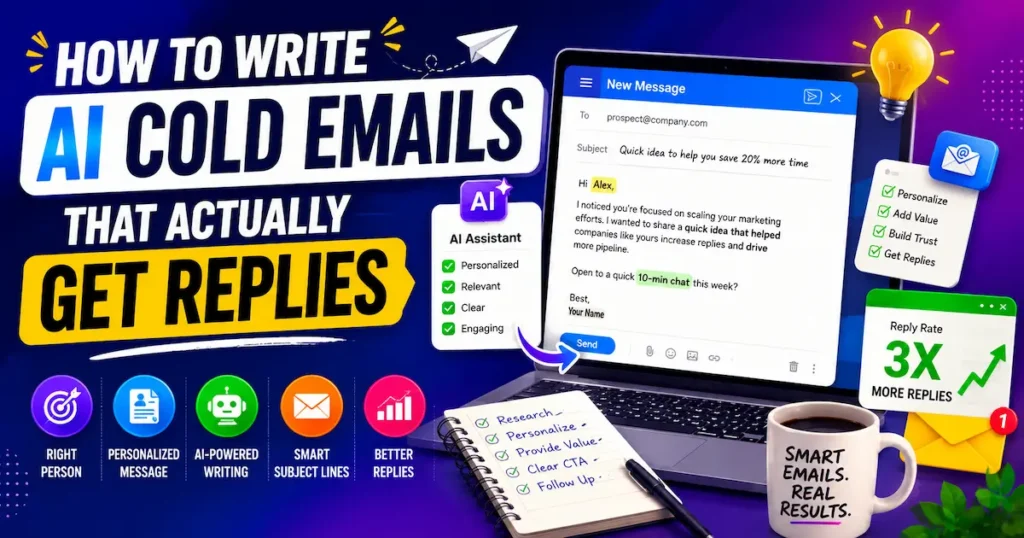
In futuristics, AI cold email sequences are only as good as the strategy behind them, and most people get the strategy backwards. They ask AI to write the whole email, hit send to 500 people, and wonder why the inbox stays quiet. Reply rates across the board have slipped to roughly 3.43% in 2026, and generic AI-written blasts are a big part of why. The good news: used correctly, AI can help you personalize faster, time your follow-ups better, and write openers that don’t sound like everyone else’s. This guide walks through exactly how to build a sequence that gets replies, not reports of “delivered.”
Why Most Cold Emails Still Get Ignored (And What AI Actually Changes)
The problem isn’t that people hate cold email. It’s that they hate irrelevant cold email. Most B2B buyers actively tune out or block senders who clearly didn’t do their homework, and a mass-produced AI email is easy to spot from a mile away. Same structure, same compliment about the company, same vague ask.
What AI actually changes, when you use it right, isn’t the writing it’s the research speed. Tools can now pull a prospect’s recent LinkedIn activity, funding news, or job postings in seconds, something that used to take you ten minutes per lead. That’s the real unlock: more relevant emails, sent faster, not more emails sent to more people.
This matters just as much for a solo freelancer in Toronto pitching local agencies as it does for a marketing team in London running outbound at scale. The mechanics of relevance don’t change with company size.
Key Takeaway: AI’s real value in cold email automation is faster, sharper research not writing an entire message for you to blast unedited.
How AI Cold Email Sequences Work, Step by Step
An AI cold email sequence isn’t one clever email. It’s a structured chain: an opener, two or three follow-ups, and a closing “break-up” message, each one building on the last. AI touches nearly every stage of that chain differently.
Where AI Fits In
At the research stage, AI scrapes and summarizes public data about a lead their role, recent posts, company signals so you’re not starting from a blank page. At the writing stage, AI drafts a first pass of each email in the sequence using that research as context, which you then edit for tone and accuracy. At the send stage, AI decides optimal send times, manages inbox warm-up, and rotates sending accounts to protect deliverability.
Where AI Should Not Fit In
AI shouldn’t decide your offer, your pricing, or the specific outcome you’re promising a prospect. Those need a human who actually understands the deal. Sequences that let AI freelance on the “ask” tend to sound confident but say nothing concrete a fast way to get ignored.
💡 Pro Tip: Feed your AI tool 3–5 real examples of replies you’ve gotten before (good and bad). Most platforms let you upload past threads for tone-matching, which produces far less generic output than a blank prompt.
Key Takeaway: Let AI handle research, drafting, and send-timing but keep the offer and the ask in human hands.
5 Steps to Build an AI Cold Email Sequence That Gets Replies
Here’s the actual build process, in order.
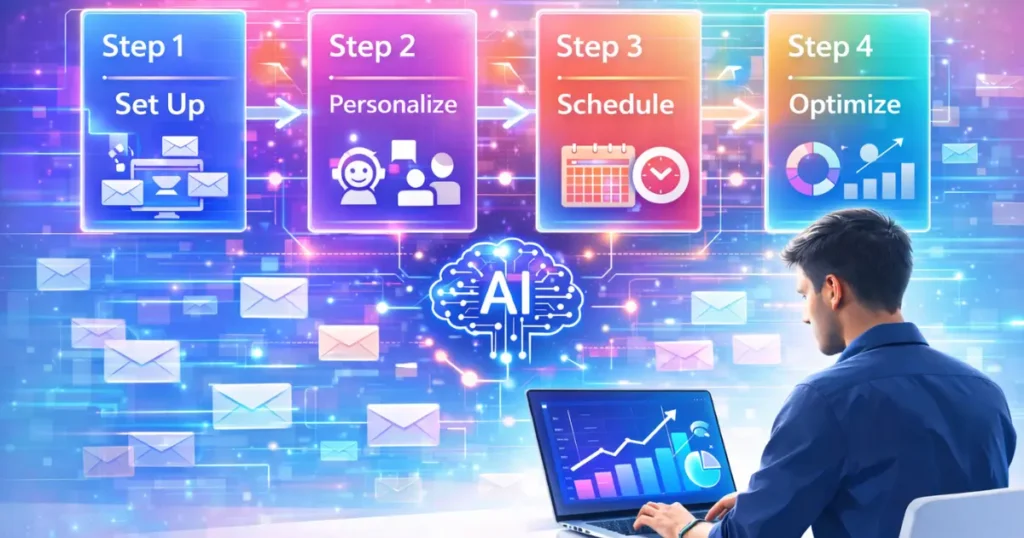
Step 1: Narrow your list before you write anything. Campaigns targeting fewer than 50 tightly-matched recipients see meaningfully higher reply rates than large, loosely-targeted blasts. Pick one shared trigger same industry, same tool stack, same recent funding round and build the list around it.
Step 2: Generate a research brief per lead, not a generic template. Use an AI research tool to pull one specific, provable fact per prospect: a recent hire, a product launch, a review they left somewhere public.
Step 3: Draft the opener around that one fact. Not three facts. One. Cramming in everything you found reads as a data dump, not a personal note.
Step 4: Build a 3–4 touch follow-up sequence before you send email one. Decide your cadence upfront (day 0, day 3, day 7, day 14) so the AI tool can schedule it automatically rather than you manually chasing replies later.
Step 5: Set your sequence to pause automatically on reply. This sounds obvious, but it’s the single most common technical mistake in AI-run sequences a prospect replies “not interested” and still gets follow-up email three because the automation wasn’t configured to stop.
Key Takeaway: A tight list and one honest personal detail per email outperform a longer list with generic AI copy every time.
The Best AI Cold Email Tools to Automate Your Sequences in 2026
Picking a platform depends on your volume, your budget, and whether you need multichannel (email plus LinkedIn or calls) or just want reliable email sending. Here’s how the main players compare right now.
1. Instantly
Best for: Solo founders and lean teams scaling send volume
Free Plan: No (14-day trial)
Starting Price: $37/month (~£29/month)
Our Rating: 4.5/5
2. Smartlead
Best for: Agencies running high-volume, multi-client campaigns
Free Plan: No (14-day trial)
Starting Price: $39/month (~£31/month)
Our Rating: 4.5/5
3. Lemlist
Best for: Multichannel personalization (email + LinkedIn)
Free Plan: No (14-day trial)
Starting Price: $59/month (~£47/month)
Our Rating: 4/5
4. Apollo
Best for: Built-in contact database plus sequencing
Free Plan: Yes
Starting Price: $49/month (~£39/month)
Our Rating: 4/5
5. Woodpecker
Best for: Deliverability-first cold email and smaller lists
Free Plan: No (7-day trial)
Starting Price: $29/month (~£23/month)
Our Rating: 4/5
6. Reply.io
Best for: Multichannel sequences with an AI SDR add-on
Free Plan: No (14-day trial)
Starting Price: $49/month (~£39/month)
Our Rating: ½ 3.5/5
For most freelancers and small business owners in the US, UK, Canada, or Australia just getting started, Instantly or Woodpecker offer the best balance of price and deliverability without the per-seat costs that make tools like Lemlist and Reply.io expensive once you add a second sender.
Real Example: A US-based outbound agency, Profit Labs AI, used Smartlead’s automation and deliverability infrastructure to lift its overall cold email reply rate to 8%, with more than 90% of those replies marked positive, booking 40 meetings from a single 550-lead campaign.
Key Takeaway: Choose your tool based on sending volume and whether you need multichannel outreach, not just the lowest sticker price.
Subject Lines and Openers AI Can Help You Write (But Not Fake)
AI is genuinely useful for generating subject line options it’s fast at producing 10 variations for you to A/B test. What it can’t do is know which one is true for this specific prospect.
Subject Lines That Actually Get Opened
Numbers in a subject line tend to lift open rates noticeably, and short, lowercase, conversational subject lines (“quick one about [company]”) consistently outperform anything that reads like a headline. Avoid exclamation points and avoid the words “opportunity” and “solution” entirely spam filters and human readers both flag them fast.
Openers That Don’t Sound Like a Template
The strongest openers reference a specific, checkable detail: a recent post, a hire, a product change. The weakest openers open with a compliment about the company’s “impressive growth” a phrase AI tools default to constantly unless you explicitly tell them not to.
Pro Tip: Add a negative constraint to your AI prompt, not just a positive one. Instead of “write a cold email opener,” try “write a cold email opener, and do not use the words ‘impressive,’ ‘noticed,’ or ‘reaching out.'” This one change removes most of the telltale AI phrasing.
Key Takeaway: Use AI to generate subject line and opener options, then pick the one that’s specific and provably true not the one that sounds the most polished.
Follow-Ups: The Real Secret Behind Higher Reply Rates
This is the part most beginners skip, and it’s the part that matters most. Well over half of all replies to a cold email campaign come from the follow-up messages, not the original send. A single follow-up alone has been shown to lift reply rates by around 40% compared to a one-and-done email.
The overall average cold email reply rate sits at 3.43% in 2026, while top-performing senders using tighter targeting and consistent follow-up sequences exceed 10% Instantly Cold Email Benchmark Report, 2026.
How Many Follow-Ups Is Too Many
Three to four touches over two to three weeks is the sweet spot backed by most current benchmark data. Beyond that, returns drop fast and complaint rates start climbing.
What Each Follow-Up Should Actually Say
Follow-up one should add new information, not just “bumping this to the top of your inbox.” Follow-up two can reference a different angle on the same problem. Your final message should be a genuine break-up email acknowledging you won’t follow up again which reliably produces some of the highest reply rates in the whole sequence because it removes pressure rather than adding it.
This applies whether you’re a small agency in Sydney chasing local retail clients or a freelance consultant in Manchester pitching UK SMEs the follow-up math is nearly identical across markets, only your subject line references and time zones for sending change.
Key Takeaway: Your follow-ups, not your opening email, are where most of your replies will actually come from.
5 Mistakes That Kill Even Good AI Cold Email Sequences
Even a well-built sequence fails if one of these creeps in.
- Sending unedited AI output. Every AI draft needs a human pass for accuracy and tone before it goes out unchecked AI copy has a habit of inventing details about a prospect’s company.
- Skipping inbox warm-up. New sending domains need a warm-up period before high-volume sending, or you’ll land in spam regardless of copy quality.
- Ignoring reply-based automation triggers. If a “not interested” reply doesn’t stop the sequence automatically, you’ll burn trust fast.
- Personalizing the first line and nothing else. A generic email with one custom sentence bolted on top is still a generic email.
- Treating Australia, Canada, the UK, and the US as one market. Time zones, spelling conventions, and even currency references in your offer need to match the recipient, not your own location.
Key Takeaway: The tool rarely fails you; an unedited, unmonitored sequence is what fails.
Frequently Asked Questions
Not automatically. AI helps you personalize at a scale that's impossible manually, but a poorly prompted AI email performs just as badly as a lazy manual one. The gain comes from combining AI's speed with real research and editing.
Most effective sequences run 3-5 emails over 10-14 days. Fewer than three rarely gives enough touchpoints; more than five starts to feel like harassment.
Yes, when it follows applicable regulations like CAN-SPAM in the US, CASL in Canada, and UK GDPR rules, which generally require accurate sender information, a working unsubscribe option, and no misleading subject lines.
A healthy B2B cold email sequence typically lands 8-15% reply rates when the list, targeting, and personalization are dialed in. Anything below 3-5% usually signals a targeting or deliverability problem, not a writing problem.
Yes, for drafting. ChatGPT or Claude can write strong email copy with the right prompts, but you'll still need a separate tool for sending, deliverability, and inbox warm-up, since general AI chat tools don't handle that infrastructure.
AI can analyze prospect information such as their role, company, industry, recent activities, and potential pain points to create more relevant opening lines and offers. However, the information should always be reviewed for accuracy before sending.
A strong prompt should include the target audience, prospect information, your offer, desired tone, email goal, key pain point, and any relevant research. The more useful context you provide, the more relevant the AI-generated email will be.
AI can help create concise, natural-sounding emails, but it does not directly guarantee better deliverability. Factors such as domain reputation, email authentication, list quality, sending volume, and spam complaints have a much bigger impact.
Keep the email short, use specific details about the prospect, avoid generic compliments, and edit the AI-generated copy before sending. Writing like a real person rather than relying entirely on templates makes the message feel more authentic.
Not necessarily. You can create a strong base framework and use AI to customize important sections for different prospects or audience segments. This provides personalization without making the entire process unnecessarily time-consuming.
Final thought
AI can make cold email faster, more personalized, and easier to scale, but it can’t replace good targeting, genuine value, or human judgment. The best results come when AI handles the research, personalization, and repetitive work while you stay responsible for the strategy and final message. Don’t use AI to send more emails just for the sake of volume. Use it to make every email more relevant. In cold outreach, better targeting and better relevance will always beat simply sending more emails.